How BLDC Motor Controllers Work: Principles, Advantages and Applications
If the inner workings of BLDC motor controllers have piqued your curiosity, you have come to the right place. In this article, we delve into the world of BLDC motor controllers, uncovering how they function, the advantages they offer, and the diverse range of applications they serve. From the technology behind electronic commutation to their benefits across industries, this comprehensive guide equips you with a solid understanding of this pivotal component in modern electric motors. Whether you are a curious consumer or a seasoned engineer, join us as we unveil the mechanics of BLDC motor controllers and explore their potential in shaping the future of electric technology.
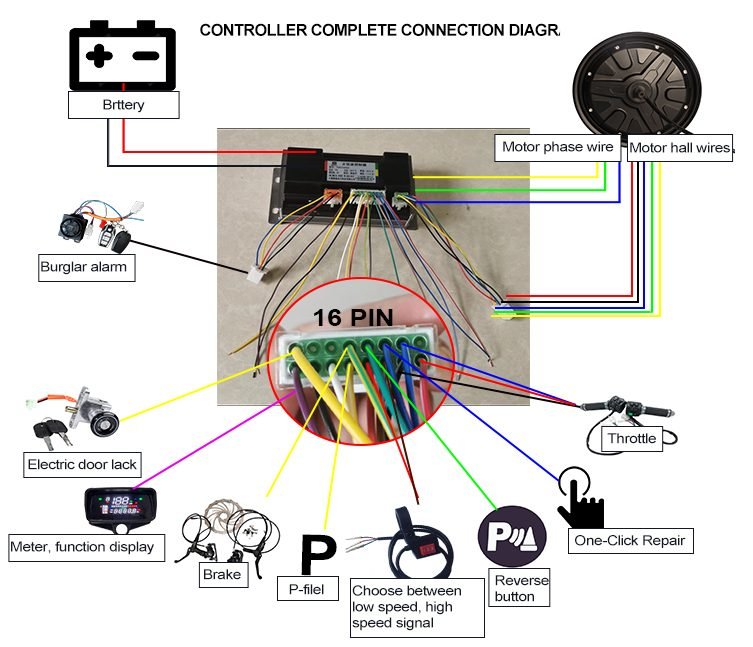
How BLDC Motor Controllers Operate
BLDC motor controllers are indispensable in driving brushless DC motors, operating by precisely managing the motor’s speed and direction through modulation of the electrical signals’ frequency and amplitude. A key advantage of BLDC systems lies in their superior efficiency compared to traditional brushed DC motors: eliminating brushes and commutators reduces friction and enhances overall longevity.
Central to their functionality is the ability to deliver smooth, accurate control over speed and torque. This is achieved through sensors that detect the rotor’s position and feed it back to the controller, enabling it to adjust power output accordingly. Many advanced controllers also feature capabilities such as regenerative braking, allowing the motor to function as a generator during deceleration and replenish the battery.
Advantages of BLDC Motor Controllers
BLDC motor controllers offer a multitude of benefits across various applications. Renowned for their efficiency, reliability and precise speed and torque control, they are lauded for their energy-saving capabilities. By employing electronic commutation in lieu of brushes, these controllers diminish energy wastage and heat generation, resulting in lower power consumption and extended motor lifespan.
Moreover, BLDC controllers deliver quiet, seamless operation, making them ideal for noise-sensitive applications. Their capacity to generate high torque at low speeds renders them suitable for tasks demanding precision and high performance. Advanced functionalities such as sensorless control, regenerative braking and overcurrent protection further enhance overall system functionality and safety.
Applications Across Industries
BLDC motor controllers find widespread use across industries, providing precise speed and direction control for brushless DC motors — from robotics and automotive to aerospace and beyond.
- Electric mobility: In electric vehicles, e-bikes, scooters and electric motorcycles, BLDC controllers optimize power management, enabling smooth acceleration and regenerative braking. For purpose-built hardware, explore our smart hub motor control solutions.
- Robotics: Precise motion control in robotic arms, automated manufacturing systems and drones ensures accuracy in positioning and movement, boosting efficiency and productivity.
- Medical devices: In surgical robots and prosthetic limbs, BLDC controllers guarantee the precision and reliability such applications demand.
- Aerospace: These controllers provide reliable, efficient control over essential functions like flight control surfaces, landing gear deployment and satellite orientation, where high performance and durability are non-negotiable.
In Conclusion
BLDC motor controllers are indispensable for driving brushless DC motors efficiently, offering precise control over speed and torque to enhance performance and prolong lifespan. Their benefits — improved energy efficiency, reliability and advanced functionalities — position them as the preferred choice across industries. To see production-grade examples, browse our full range of motors and controllers, and pair the right controller with the right motor for your next project.