What Is an Electric Motorcycle Motor Hub – and Why It Changes the Ride
Ask someone to sketch an electric motorcycle and they will usually draw a motor somewhere near the middle of the frame. On most of the best-selling electric two-wheelers, however, the motor is where few people think to look: inside the wheel. That packaged unit — motor, axle and wheel in one — is the electric motorcycle motor hub, and understanding how it works explains a lot about why modern electric motorcycles accelerate the way they do.
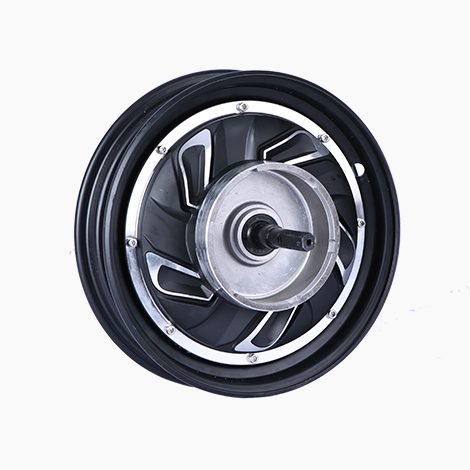
How an electric motorcycle motor hub works
The motor hub is the component that turns electrical energy from the battery into the rotation of the wheel. It is a brushless motor built around three parts:
- Stator — the stationary part, carrying copper windings and fixed relative to the axle. When current flows through the windings it produces a magnetic field.
- Rotor — the rotating part connected to the wheel, carrying permanent magnets around its rim.
- Controller — the electronic brain that sequences current through the stator windings so the magnetic field rotates, dragging the magnets — and the wheel — around with it.
There is no clutch, no gearbox and no chain in this drivetrain. Electromagnetic force turns the wheel directly, which is why a hub-motor motorcycle launches from a standstill with instant, gear-free torque and delivers power in one seamless pull all the way to top speed.
Because the entire drivetrain is packaged in the wheel, the rest of the motorcycle is liberated: no transmission tunnel, no drive-chain maintenance, and a lower centre of gravity that makes the bike noticeably steadier in corners and at low speed. If you are comparing motor layouts for a build or a product line, our electric motorcycle hub motors page shows the power and wheel-size options side by side.
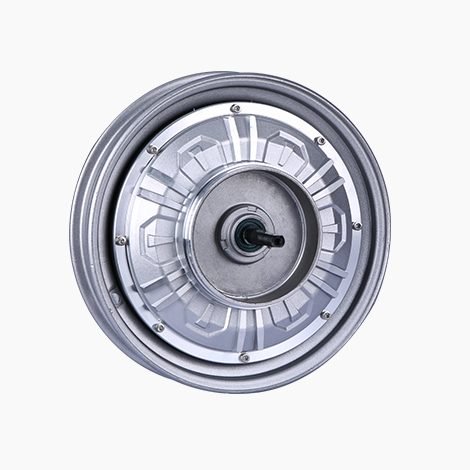
What the motor hub brings to the ride
- Compact and lightweight. With the motor in the wheel, the frame carries only battery and controller. Motorcycles come out lighter and more agile, easier to thread through traffic and to park.
- Efficient direct drive. Eliminating the transmission removes its energy losses, so more battery capacity becomes kilometres of range. That is the difference between “fine in town” and genuinely practical for daily commuting and longer rides.
- Smooth and quiet. No combustion, no gears, no chain noise — just near-silent acceleration with none of the vibration that fatigues riders on long trips.
- Stability and control. Motor mass at the wheel, battery low in the frame and instant throttle response add up to predictable handling, and the ability to accelerate decisively out of a hazard is a genuine safety benefit.
Where hub motors fit — and where they don’t
A motor hub is the natural choice for commuters, delivery fleets and leisure bikes where efficiency, silence and low maintenance outrank extreme hill-climbing force. For very heavy vehicles or sustained steep grades, sizing matters: choose a motor whose continuous power rating — not just its peak figure — matches the vehicle weight and target gradient. Our moped and scooter motor range covers lighter applications, while high-power motorcycle hubs handle the demanding ones.
The takeaway
The electric motorcycle motor hub compresses an entire drivetrain into a single wheel component: stator windings, a permanent-magnet rotor and a controller working together to turn current into motion with no gears, no chain and almost nothing to service. It is a large part of why electric motorcycles feel the way they do — quick, quiet and effortless. To see real specifications, explore our full hub motor catalogue or talk to the factory about a motor-controller pairing matched to your vehicle.