How to Choose the Right Hub Motor for a Moped Scooter
Choose the right hub motor and a moped scooter feels punchy, efficient and effortless. Choose the wrong one and the same scooter climbs slowly, runs hot and drains its battery early. Motor selection is not just a power number on a spec sheet — it is a balance of torque, size, terrain and build quality. This guide walks through the factors that actually matter, then compares the main motor types so you can match the drivetrain to the vehicle and the market it serves.
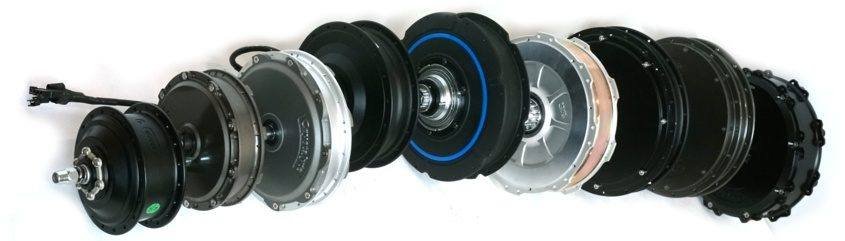
Five factors that decide the right motor
1. Power and torque. Power (watts) sets the ceiling on top speed and acceleration; torque (N·m) determines hill-climbing ability and how the scooter behaves with a heavy rider or cargo. These two figures trade off against each other, so define the use case first — a 40 km/h city commuter and a 25 km/h cargo scooter need very different motors even at the same nominal voltage. When in doubt, size the motor by continuous rating, not peak, and pair it with a controller and motor designed together.
2. Size and weight. Everything must fit inside a wheel, so motor diameter, width and dropout spacing constrain the choice as much as watts do. Smaller motors keep the scooter light and the handling nimble; larger motors buy power and torque at the cost of unsprung weight. Match the motor to the wheel size and fork/swingarm the vehicle was designed around.
3. Terrain. Flat urban routes flatter small geared motors, which are light and efficient. Hilly or off-road duty demands the sustained output of a larger direct-drive unit. Specifying for the real terrain — not the brochure terrain — is the single biggest factor in avoiding overheating complaints and returns.
4. Durability. Scooters live outdoors: rain, dust, vibration and washdowns. Look for sealed housings, quality bearings and a supplier with field-proven reliability rather than the cheapest quote. A motor that survives two monsoons is cheaper than two replacement motors.
5. Total drivetrain compatibility. The motor is one part of a system. Voltage, controller current limit, battery discharge rate and throttle all have to agree, which is why buying a matched kit is often safer than mixing components — see our matched conversion kits for pre-paired combinations.
Hub motor types for moped scooters
Geared hub motors. A small high-speed motor spins an internal planetary gearset that multiplies torque at the wheel. They are compact, light and efficient at typical urban speeds, with a freewheel clutch that lets the wheel spin freely when coasting. The trade-off is a gearset that eventually wears. Best for flat-city commuters and shared fleets.
Direct-drive hub motors. No gears — a larger motor is laced straight into the wheel. They run quietly with almost no wear parts, deliver strong sustained power, and can regeneratively brake, feeding energy back to the battery on deceleration. They are heavier, and there is slight magnetic drag when coasting. Best for hilly routes, higher speeds and riders who value regenerative braking.
Brushless hub motors. Most modern hub motors are brushless by design, which is what makes them low-maintenance: no brushes to wear out, less friction, longer service life and better efficiency than brushed equivalents. Treat “brushless” as a baseline requirement rather than a premium feature.
In-wheel (integrated) designs. Fully integrated in-wheel motors simplify assembly — the wheel arrives as a complete powered unit — and free the frame designer from drivetrain packaging. The same caveats about unsprung weight and size limits apply, so integration suits scooters designed around the motor from the start.
Making the decision
Start from three questions: What terrain will the scooter actually ride? What speed and rider load must it sustain? And who services it when something wears? The answers will point you to either a light geared motor for flat-city efficiency or a direct-drive unit for power, silence and regenerative braking. Compare real-world-verified options in our higher-power motorcycle range if your scooters exceed moped-class performance, browse the complete product catalogue for specifications, or contact the factory with your vehicle weight, wheel size and target speed for a matched recommendation.