How a Brushless DC (BLDC) E-Bike Hub Motor Works
Most modern e-bikes are powered by a brushless DC (BLDC) motor. Understanding how it converts stored battery energy into wheel-turning force helps buyers choose the right unit and helps repair shops diagnose faults. In this guide we open up a typical hub motor and explain every major component in plain language.
What Is a Brushless DC Motor?
A BLDC motor is an electric motor that uses electronic switching instead of physical brushes to drive current through its windings. Inside an e-bike hub motor the stationary stator carries copper windings, while the outer rotor (the part attached to the wheel) holds permanent magnets. Because there are no brushes to wear out, BLDC motors are durable, efficient and nearly silent.
Stator, Rotor and Neodymium Magnets
The stator is a laminated iron core wrapped in three groups of copper coils. The rotor carries high-strength neodymium magnets arranged in alternating north/south poles. When current flows through the coils in the correct sequence, the magnetic field pushes against the rotor magnets, producing smooth rotation. Better motors use thicker laminations and higher-grade magnets to reduce heat and eddy-current losses.
Electronic Commutation and Hall Sensors
Unlike a brushed motor, a BLDC motor cannot switch itself. It relies on three Hall-effect sensors mounted on the stator to detect the rotor position dozens of times per second. The controller reads these signals and energizes the correct coil group at the right moment. This ‘electronic commutation’ is what makes the motor start smoothly from standstill and run efficiently at every speed.
Why BLDC Won Over Brushed Motors
Brushed motors lose power to friction and sparking at the commutator and need periodic brush replacement. BLDC motors eliminate both problems, delivering 80-90% efficiency, longer life and far less maintenance. That is why every reputable e-bike motor supplier, including SINEPOWER, builds brushless hubs and mid-drives almost exclusively.
Hub vs Mid-Drive BLDC Layouts
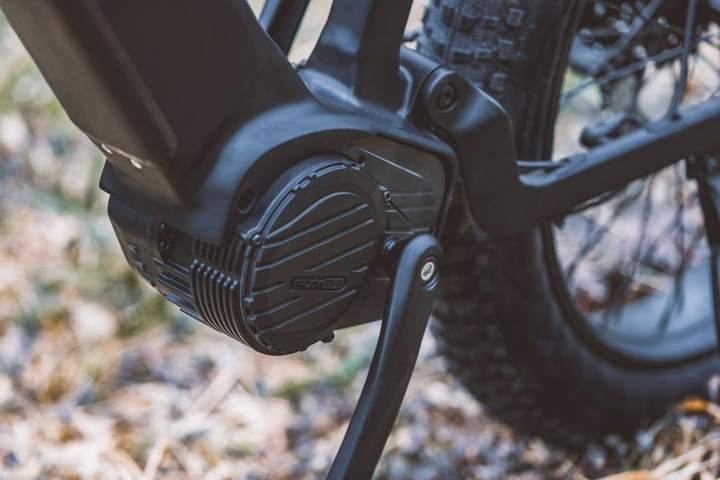
In a hub motor the BLDC assembly sits inside the wheel. In a mid-drive the same BLDC principle drives the cranks through a reduction gear, leveraging the bike’s gears for torque. Both use identical commutation theory; the difference is packaging and where the torque is applied. See our hub vs mid-drive comparison for the full trade-off.
How SINEPOWER Rates a BLDC Motor
We publish nominal and peak wattage, rated torque in Nm, efficiency curve and ingress protection (IP) rating for every model. These numbers let distributors and OEMs match a motor to a specific vehicle class instead of guessing. Always confirm the nominal rating, not just the marketing ‘peak’ figure, when comparing suppliers.
Frequently Asked Questions
How long does a BLDC hub motor last?
A quality sealed BLDC hub motor typically runs 10,000-20,000 km or more. The bearings, not the windings, are usually the first wear item. Keeping the axle nuts torqued and the cables strain-relieved extends life significantly.
Do hub motors need regular maintenance?
Very little. There are no brushes to replace. The main tasks are checking bearing noise, inspecting phase/Hall cables for cracks, and ensuring the wheel axle is properly torqued. Internal servicing is rarely needed before 15,000 km.
Can a BLDC motor run without Hall sensors?
Yes, in ‘sensorless’ mode the controller estimates rotor position from back-EMF. This works well at speed but can cause weak startup. Most e-bike hubs use Hall sensors for crisp, reliable low-speed torque, especially on hills and cargo loads.