How to Maintain and Service an E-Bike Hub Motor
Hub motors are famously low-maintenance, but ‘low’ is not ‘zero’. A simple periodic check prevents roadside failures and extends service life. This checklist is written for repair shops and fleet managers.
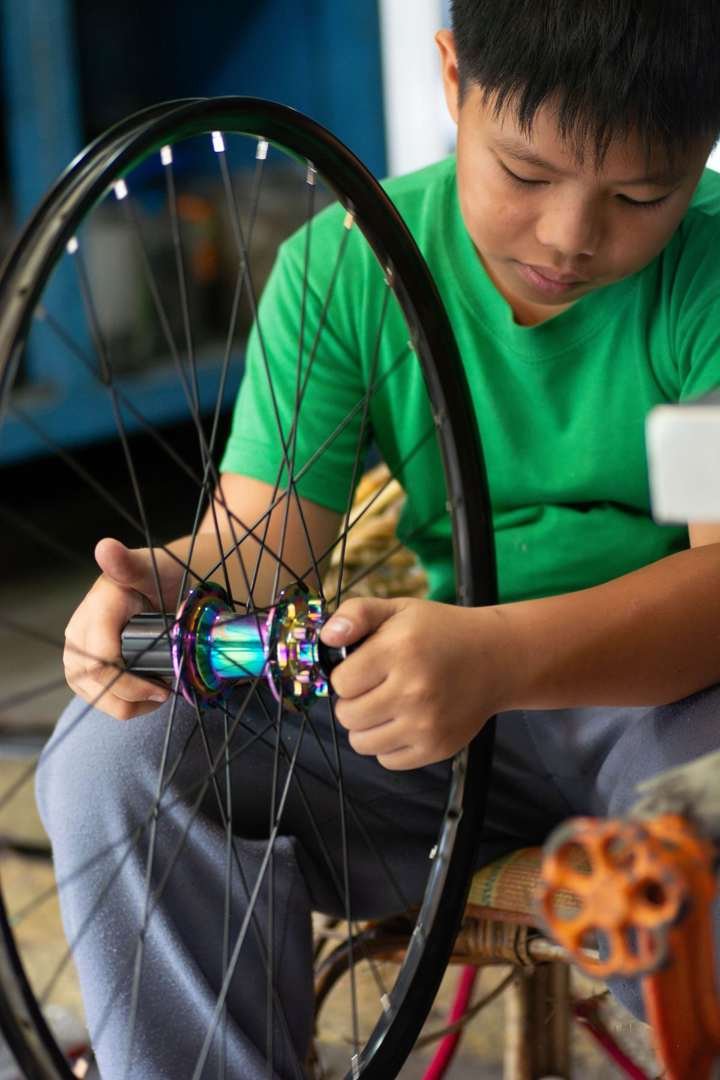
Listen for Bearing Noise
The most common hub-motor fault is a worn bearing. Lift the wheel and spin it; a smooth, silent spin is healthy. Grinding, rumbling or a cyclical clicking points to a failing bearing. Catching it early prevents rotor-magnet contact, which can destroy the motor.
Check the Phase and Hall Cables
The three thick phase wires and the thin Hall sensor wires exit the axle and flex every time the wheel turns. Inspect for cracked insulation, chafing at the dropout, and a secure connector. A broken Hall wire causes stuttering startup; a shorted phase wire can cook the controller.
Magnet and Rust Inspection
If a hub has been flooded, remove the side cover (where serviceable) and check for rust on the stator and magnet corrosion. Surface rust on the iron stator can be cleaned; flaking neodymium magnets mean the rotor should be replaced. Prevention beats cure: confirm the IP rating matches the operating environment.
Axle Nuts and Torque
Hub motors transfer torque through the axle, not the dropouts alone. Use torque washers and tighten to the manufacturer spec (commonly 25-40 Nm). Loose axles twist in the dropouts, damaging the frame and the cable exit. Re-torque after the first 100 km.
When to Rebuild vs Replace
For a worn bearing, rebuilding (new bearings, fresh grease, new seals) is economical. For burned windings, demagnetized rotor or flooded core, replacement is usually cheaper than labor. Stock common bearing sizes and seals so turnaround is fast.
Frequently Asked Questions
How often should I service a hub motor?
A visual and audio check every 1,000-2,000 km, or each season for fleet vehicles. Internal bearing service is typically only needed after 10,000-20,000 km.
Can I lubricate a sealed hub?
Sealed hubs are greased for life and should not be opened casually. Only serviceable (‘serviceable’ labelled) hubs are meant to be opened; forcing a sealed unit risks water ingress.
What are the signs of a failing bearing?
Grinding or rumbling while spinning the wheel, a rhythmic clicking under load, and slight wheel play at the axle are the classic early signs.