Why Hub Motor Kits Are the Smart Choice for Electric Motorcycle Conversions
Converting a gasoline motorcycle to electric power used to mean fabricating mounts, routing chains and wrestling with a custom drivetrain. A hub motor kit removes almost all of that work: the motor lives inside the wheel, the controller and throttle plug in, and the bike’s original frame, suspension and brakes stay untouched. For distributors and workshop owners, that simplicity is exactly why conversion kits keep selling — fewer hours of labour, fewer custom parts, and a result that looks factory-built.
This article explains where hub motor kits genuinely outperform alternative drivetrains in electric motorcycle conversions, and what to check before you stock or install one.
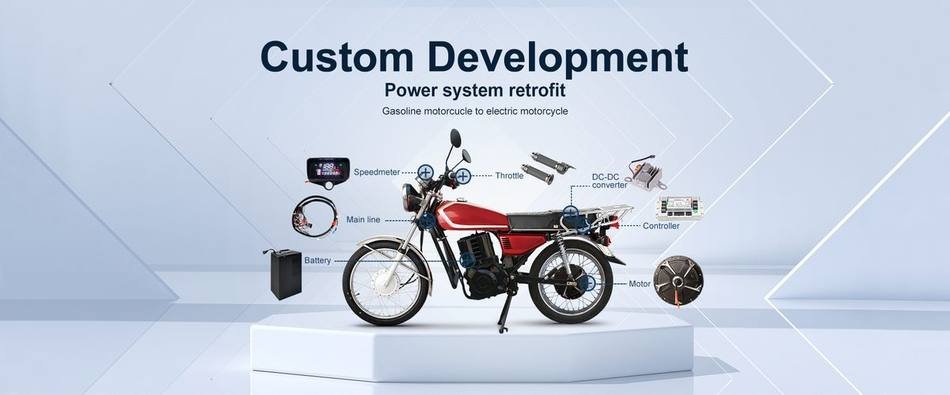
Why hub motor kits suit motorcycle conversions
Simplified installation. A hub motor replaces the wheel hub itself, so there is no transmission to mount, no chain or belt to align and no mid-frame modifications. For a conversion workshop, a job that once took days becomes a same-day swap — lace the motor into a rim, connect the controller and kit components, and the motorcycle is ready to wire and test.
High drive efficiency. Because the motor drives the wheel directly, there are no chain or gearbox losses between motor and road. More of the battery’s energy reaches the tarmac, which translates into longer range per charge — the specification customers care about most after price.
Quiet, low-vibration operation. With no gears meshing and no chain slapping, a hub motor conversion rides noticeably smoother and quieter than a combustion drivetrain. Less vibration also means fewer fasteners working loose and fewer warranty calls.
Regenerative braking. Direct-drive hub motors can feed energy back into the battery during deceleration, extending range and reducing brake wear — a strong selling point for delivery fleets and urban commuters.
Built-in protection. Quality kits include overcurrent protection, temperature monitoring and sealed, water- and dust-resistant motor housings, so the drivetrain survives rain, mud and washdowns that would trouble an exposed chain drive.
What to look for in a conversion kit
- Power rating matched to the bike. Light mopeds and small motorcycles pair well with 1,000–3,000 W hubs; larger frames and off-road builds call for higher-power electric motorcycle motors with correspondingly stronger controllers.
- Controller compatibility. The controller is the brain of the conversion — verify its current rating, voltage and communication protocol match the motor before purchasing. Mismatched controllers are the most common cause of poor performance and returns.
- Rim and brake compatibility. Confirm the hub’s dropout width, spoke flange diameter and brake mounting (disc or drum) fit the donor motorcycle’s wheel and forks.
- Completeness of the kit. A good kit ships with the motor, controller, throttle, wiring harness and mounting hardware, so the installer is not hunting for parts mid-job.
Browse the full range of hub motor conversion kits to compare voltage, power and wheel sizes side by side.
Built for real-world durability
A conversion is only as good as its weakest seal. Hub motors for motorcycle conversions should use sealed bearings and IP-rated housings that shrug off rain, dust and corrugated back roads. Because the motor has no external transmission to service, the practical maintenance schedule comes down to brake checks and bearing inspections — a major advantage for rental fleets and ride-share operators whose bikes earn money every day they are on the road.
Durability also depends on honest power ratings. Motors marketed well above their continuous rating will overheat on long climbs, so choose a supplier that specifies continuous output, not just peak figures.
Getting started
Whether you are converting a single commuter or planning a production run of electric mopeds, start by matching motor power to the vehicle’s weight and target speed, then choose a controller with headroom above the motor’s continuous current. Our hub motor catalogue covers everything from compact moped scooter motors to high-torque motorcycle hubs, with technical drawings and controller pairings available for each model — so your next conversion starts with parts that are guaranteed to work together.